
Milestone marks a decisive phase in the freighter program, which moves toward testing despite supply-chain delays
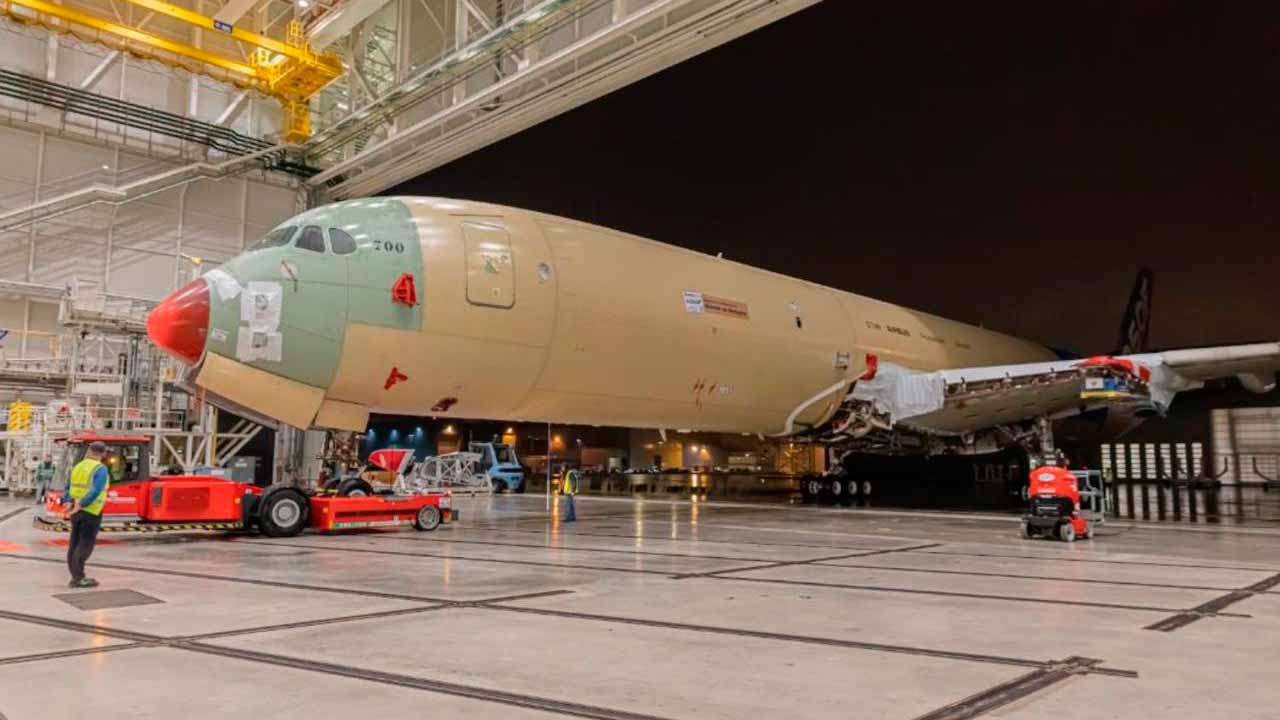
Airbus has completed assembly of the first A350F, the new freighter variant of the A350 family. Although the prototype has not yet received its engines — something common at this stage of the process — the milestone represents a crucial step for the program, which has faced delays due to supply-chain issues, particularly involving supplier Spirit AeroSystems.
+ Japan unveils modular prototype of long-range anti-ship missile
Final assembly began in August after the first fuselage sections of the MSN700 prototype arrived in Toulouse. According to technical information, this experimental aircraft will be responsible for launching the model’s flight-test campaign.
Schedule slipped, but program moves forward steadily
Originally, Airbus planned to certify and deliver the first A350F units in 2025. However, the company revised the schedule and now expects commercial entry into service in 2027. Despite the adjustments, the freighter has attracted strong market interest: by October, the program had accumulated 74 confirmed orders. More recently, Air China Cargo officially added six new aircraft to its order portfolio.
The European manufacturer says that, even amid logistical challenges, development continues “with confidence.”
Performance and direct competition with the Boeing 777F
Designed to compete with the Boeing 777F and the upcoming 777-8F, the A350F was conceived for long-haul cargo operations. The aircraft will be able to carry more than 110 tonnes over distances of up to 4,700 nautical miles (around 8,700 km), figures that place it among the highest-capacity freighters in its category.
Special livery on the first prototype
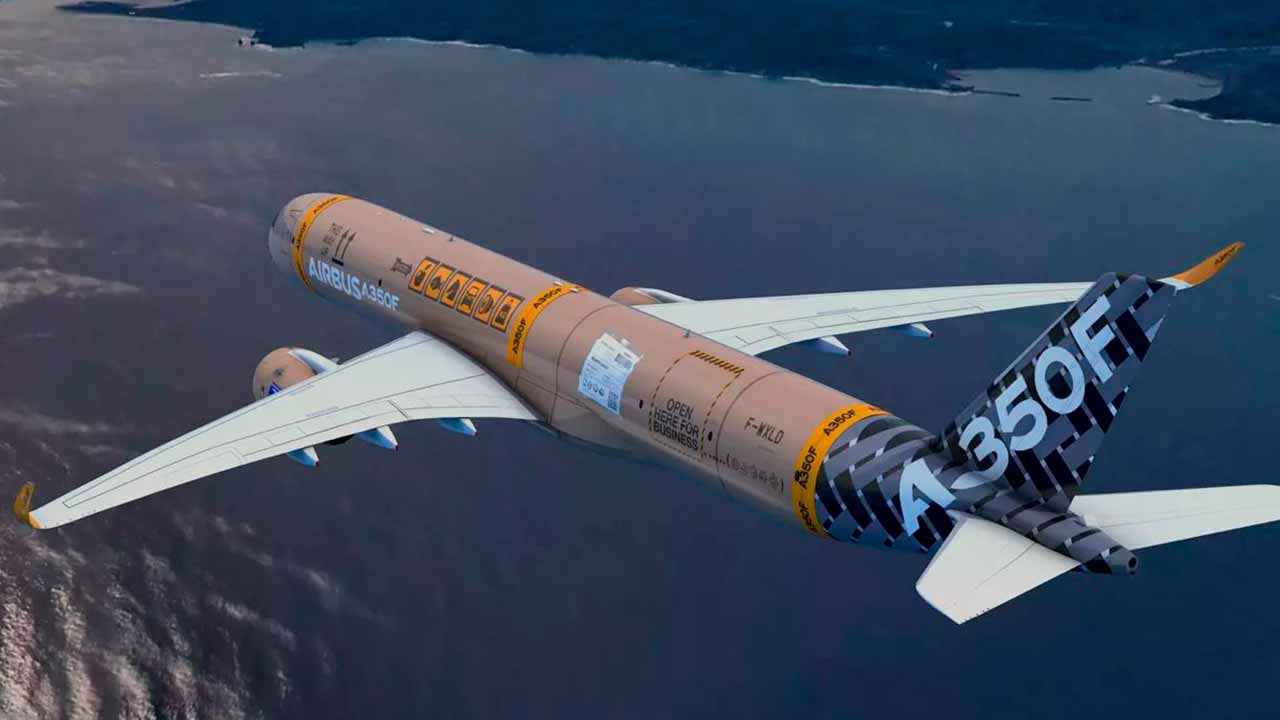
A curious detail revealed by Airbus is that the first A350F will receive a special livery resembling the look of a cardboard box — a direct tribute to the cargo segment and a symbolic way to highlight the launch of the new aircraft.
Source and images: Airbus. This content was created with the help of AI and reviewed by the editorial team.
